A good company away day looks effortless to the people attending it.
Behind the scenes, it rarely is.
Somebody has to balance the venue, activities, meeting time, food, transport, weather, group dynamics and the simple reality that not everybody in the company enjoys the same things.
The biggest planning mistake is usually starting with: “What activity should we book?”
A better question is: “Why are we taking the team away from work?”
Once that is clear, the venue and activities become much easier to choose.
Event Square delivers corporate team-building and company-event programmes at hotels, estates, offices and other venues across Dublin, Wicklow and the wider country.
1. Decide what the day is actually for
Company away days generally fall into a few broad categories.
- celebrate;
- help people get to know each other;
- bring departments together;
- launch a new team;
- develop communication or leadership;
- give people a break after a busy period;
- combine a business meeting with something enjoyable;
- or simply organise a good staff day out.
Those are not the same brief.
A leadership team that needs to explore how it works together requires a different programme from a large employee group looking for an enjoyable summer afternoon.
Trying to make one activity solve every organisational problem normally results in an event that feels over-designed.
Give the event one primary purpose and perhaps one secondary purpose. Everything else should support those.
2. Decide how much of the day should be structured
One of the easiest ways to ruin a company away day is to schedule every minute.
People also need time to talk.
A team that rarely meets in person may get as much value from an unhurried lunch or coffee between activities as it gets from another organised challenge.
Think of the day as a rhythm: arrive → meet → eat → experience → socialise → finish.
The event should feel different from work.
3. Choose the setting before finalising the activity
The venue changes what is possible.
Your own office
This keeps logistics simple and can work particularly well for indoor creative challenges, short energisers or an activity following a company meeting.
The disadvantage is psychological: people are still in the place where they work.
If using the office, change the normal environment as much as possible. Move rooms. Rearrange furniture. Put laptops away.
A hotel or conference venue
Hotels work well when the away day combines meeting rooms, catering and activities.
The practical advantage is consolidation: people can meet, eat and take part in an experience without repeatedly moving between locations.
Before booking an activity, check the actual usable space, not simply the hotel’s total function-room capacity.
Outdoor grounds should also be confirmed rather than assumed.
Dublin city centre
City events can be particularly useful when people are travelling from several locations.
A Dublin treasure hunt, indoor challenge or evening event can sit naturally around a meeting, lunch or dinner.
Dublin’s public transport network includes bus services, Luas, DART and commuter rail, which can make central events practical for independently travelling participants.
Countryside or estate setting
When the objective is to get people genuinely away from the normal environment, an estate, outdoor venue or rural hotel changes the tone immediately.
It also opens the door to larger activity zones, hiking, bushcraft, target activities, sports-day programmes and other experiences that need space.
The trade-off is transport. Do not underestimate the effect of a long journey on either side of the event.
4. Match the activity to the group, not the loudest person on the planning committee
This is one of the most important operational decisions.
Every team contains different levels of confidence, mobility, competitiveness and interest.
If the activity relies entirely on one skill, the same people may dominate throughout.
Better company events create several ways to contribute.
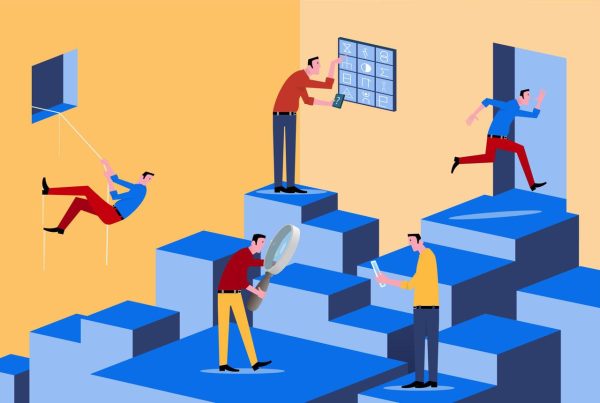
Event Square’s A-Team Challenge and WeGo Team Challenge combine different types of tasks rather than making the entire programme a sporting competition.
That variety matters.
The person who has no interest in running may be the one who spots the solution to the puzzle. The quiet team member may organise everybody. The manager may discover that somebody else is a natural leader when the job titles disappear.
That is often where the interesting part of experiential team building happens.
5. Decide whether the day should be competitive or collaborative
Competition can create energy very quickly. But not every team needs more competition.
Competitive formats
These suit groups looking for energy, humour, clear winners, team identity and a lively finale.
Examples include multi-activity challenges, treasure hunts, Old School Sports Day and Celtic Games.
Collaborative formats
These are often a better choice when the goal is connection, integration, leadership development, creativity or bringing several departments together around one outcome.
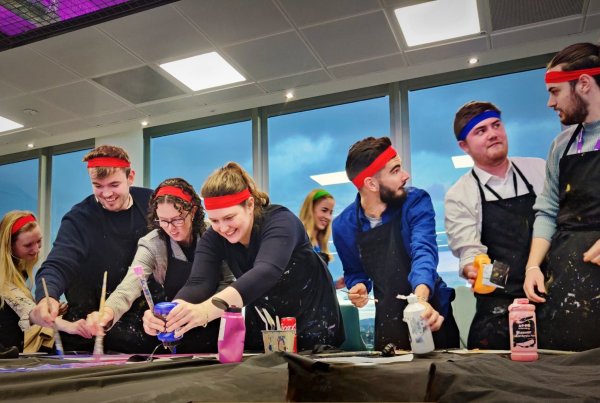
Event Square’s Big Picture, for example, divides participants into groups that each create a section of one larger artwork. The finished result only works when the groups coordinate.
There is no rule saying an event cannot contain both. A programme can begin with competitive activity zones and end with one collective finale.
6. Build an Irish weather plan at the beginning
Do not treat wet weather as an unexpected crisis.
For an outdoor event in Ireland, the weather decision should be part of the event design.
That does not mean avoiding outdoor events. It means asking sensible questions early:
- Can the activity operate in light rain?
- Is there indoor space?
- Can the programme be adapted?
- When is the final weather decision made?
- What footwear and clothing should guests bring?
- Will catering still work if everybody moves inside?
A clear Plan B is better than a complicated rescue operation on the morning of the event.
7. Be realistic about travel
A day can look perfect on a spreadsheet and still fail because too much of it is spent moving people.
If you have a six-hour company day and two of those hours disappear into coaches and transfers, you no longer have a six-hour event.
Start with where people are coming from. Then decide whether the destination is worth the journey.
For Dublin-based teams, it can make sense to keep the event within the city or Greater Dublin area.
For a residential conference, the equation changes because accommodation, meeting space, dinner and activities can all sit together.
Neither approach is automatically better. The best venue is the one that works for the full itinerary.
8. Do not forget the transitions
Organisers naturally focus on the headline activity. Participants notice the gaps.
Where do coats and bags go? Where does the group meet? What happens when the meeting ends? When does lunch finish? Is there enough time to use the bathrooms before the activity starts? Who tells people which team they are on? Where does everybody go after the finale?
These are small questions individually. Together they determine whether the event feels smooth or chaotic.
9. Food should fit the event
Avoid planning lunch independently from the activity schedule.
A large meal immediately before a high-energy outdoor programme may not be ideal.
Likewise, an activity that runs through normal lunchtime without food will change the mood of the group quickly.
Think of catering as part of the timetable.
For an informal summer event, people may want to eat and move between activities. For a more structured team challenge, it can be better to keep the competition flowing and bring everyone together afterwards.
For an evening event, dinner may actually become part of the experience — particularly with formats such as a Murder Mystery.
10. Build inclusion into the programme rather than adding it afterwards
Do not wait until the week of the event to discover that somebody cannot take part.
Ask early about relevant mobility, accessibility or dietary requirements.
Then build a programme that gives different people meaningful roles.
Inclusive does not have to mean low energy. It means people can contribute without being forced into an activity that clearly excludes them.
Creative tasks, communication challenges, puzzles, navigation, light physical activities and cultural experiences can all be combined to create variety.
11. Low-tech often works better away from work
Most office teams spend their working days using technology to communicate.
Away days offer an opportunity to remove some of it.
Maps. Paint. Drums. Puzzles. Wood. Ropes. Clue books. Sports equipment. Conversation.
These simple things create shared physical experiences that cannot be minimised into another browser tab.
For Event Square, low-tech does not mean unsophisticated. It means the event technology stays in the background and the team itself becomes the focus.
12. Finish properly
Every event needs an ending.
That might be a tug of war, a final puzzle, a treasure-hunt safe, a shared artwork reveal, a winner announcement or simply everybody coming back together for a drink.
Do not allow teams to finish at different times and quietly drift away unless that is intentionally how the event is designed.
A shared finale converts several separate activities into one collective experience.
It also gives the organiser a natural point to thank everyone and explain what happens next.
A simple company away-day planning checklist
- What is the primary purpose?
- How many people are attending?
- Where are they travelling from?
- Is the event half-day, full-day or residential?
- How much meeting time is required?
- What type of energy does the team need?
- Does the group want competition, collaboration or both?
- Are there accessibility considerations?
- What usable indoor and outdoor space is available?
- What is the weather fallback?
- Where do food and drinks fit?
- How does the event end?
Once those twelve things are clear, choosing the activity becomes much easier.
What should you send Event Square?
A useful initial enquiry does not need to be long.
- company name;
- date or possible dates;
- estimated group size;
- preferred location;
- approximate timing;
- whether you already have a venue;
- whether accommodation or meeting space is involved;
- and what you want people to get from the day.
From there, the activity should be matched to the brief rather than the other way around.
Frequently asked questions
What is a company away day?
A company away day is organised time away from normal day-to-day work that brings colleagues together for meetings, team building, social activities, development or celebration. It can range from a half-day activity to a residential programme.
What are good company away-day ideas in Ireland?
The right option depends on the team. Popular formats include multi-activity team challenges, treasure hunts, sports-day activities, collaborative creative challenges, Celtic Games, cultural workshops, bushcraft and evening entertainment.
Should a company away day include team building?
Not necessarily. Some teams primarily need relaxed social time. Others benefit from structured activity. The decision should depend on the purpose of the day rather than assuming every away day needs formal exercises.
Where can we run a company away day?
Depending on the programme, it can take place at your office, a hotel, a dedicated venue, a city-centre location, an estate or an outdoor activity setting. Event Square operates as a mobile events company and can help identify suitable formats for the space available.
What is a good company away day for a mixed group?
Choose a programme containing different types of activity so that success does not depend on fitness, confidence or one particular skill. Problem solving, communication, creative tasks and light physical challenges can work well together.
Should we plan an indoor backup for an Irish outdoor event?
Yes. The fallback may be a different programme, indoor space or a weather-tolerant version of the activity, but the decision process should be agreed before the event rather than improvised on the day.
How early should we start planning?
The earlier you can confirm the core brief, group size and preferred date, the more flexibility you normally have around suitable venues and programme design. Exact availability should always be checked rather than assumed.
Explore team building in Dublin, team building in Wicklow, or contact Event Square with your group size, date and preferred location to start shaping the day.