
The best team building for a hybrid team is designed around equal participation, not around a video link. In practice, that usually means choosing one of three formats: bring everyone together for a deliberate in-person anchor day, run a fully virtual shared experience, or create a genuinely hybrid session where remote colleagues have roles that matter to the outcome.
For Irish organisations with colleagues split between offices, home working and multiple locations, the event itself does not have to be “hybrid” just because the workforce is. Often the strongest option is to use face-to-face time for the things that are difficult to recreate online: relationship building, creative problem solving, shared experiences and informal conversation.
What is team building for a hybrid team?
Hybrid team building is designed for colleagues who do not all work in the same place or follow the same office pattern. The group might include home-based employees, Dublin-based colleagues, regional teams and international staff.
The planning question is simple: how will every person take part, and what will they contribute? If remote colleagues can only watch what is happening in the room, the format needs to change.
Three formats that work for hybrid teams
1. An in-person anchor day
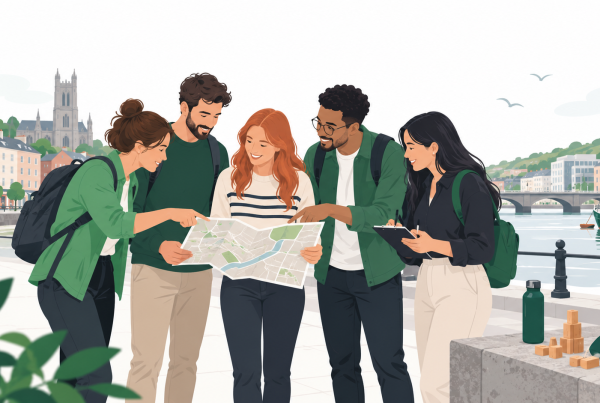
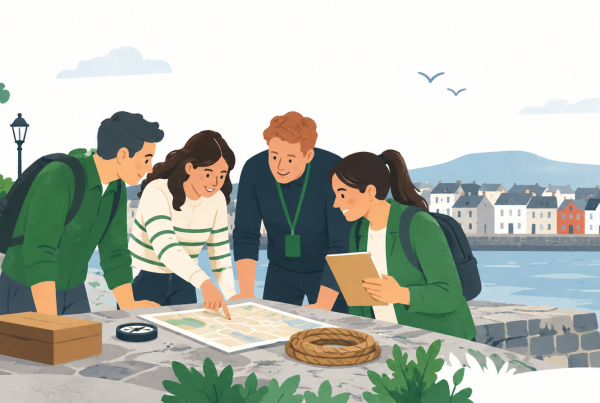
When travel is realistic, bringing the team together can be the most useful option. If colleagues spend much of the week on calls and screens, make the shared day deliberately different.
Low-tech activities such as Big Picture, practical problem-solving challenges and cultural workshops give people a reason to talk, move, build and solve something together. The value is the shared experience, not the technology around it.
2. A fully virtual shared event
If people cannot reasonably travel to one location, a fully virtual session is often fairer than mixing a large in-room group with a small number of remote observers.
Event Square’s current catalogue includes Virtual Team Pursuit, while The Big Quiz can work in live or virtual formats. Virtual sessions are strongest when they are short, hosted and clearly structured.
3. A true hybrid activity
A mixed in-room and online session can work when the remote participants have information, decisions or tasks that the people in the room need. The remote role should be essential, not decorative.
If the activity cannot be redesigned that way, it is usually better to choose a different format.
Start with the connection problem
Before choosing an activity, ask why the team needs to reconnect. Common reasons include new starters who have not met colleagues, regional teams working in silos, rapid organisational change, or people who communicate efficiently online but have little informal contact.
A social event may be enough when the issue is familiarity. If the challenge is role clarity, communication or leadership, use a more structured team-development format instead.
Use in-person time for what is genuinely better face-to-face
A hybrid team does not need to meet physically for routine updates. Use an anchor day for work and experiences that benefit from being together:
- relationship building and informal conversation;
- strategy and alignment;
- creative problem solving;
- team development;
- celebration and recognition;
- shared cultural or experiential activities.
For teams that already spend much of the week online, this is where Event Square’s low-tech approach fits naturally.
Good low-tech activities for hybrid teams meeting in Ireland
Collaborative creative challenges
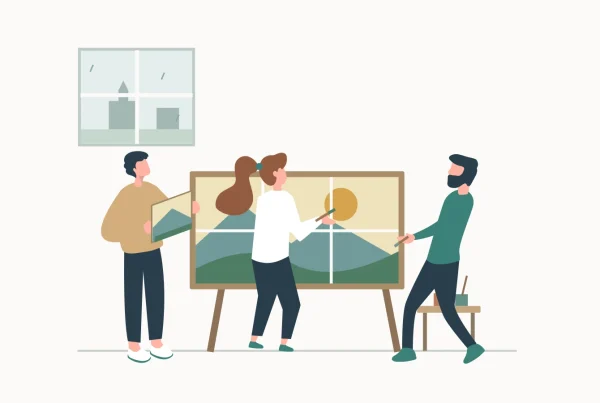
Big Picture gives small groups separate pieces of a larger shared task. Teams have to coordinate their work so the final result comes together.
Irish cultural workshops
A Bodhrán Workshop can work particularly well for international colleagues meeting in Ireland. It is social, collaborative and does not depend on sporting ability.
Multicultural team experiences
For internationally diverse groups, the Around the World Challenge combines cultural themes with team tasks. It can suit multinational colleagues who are physically together for an Irish meeting or away day.
Hosted social formats
Quizzes, Murder Mystery events and evening activities are useful when the priority is informal connection rather than formal team development.
How to avoid creating two classes of participant
The biggest risk in a hybrid event is that people in the room get the real experience while remote colleagues get the broadcast.
Check the basics:
- Can remote participants hear instructions clearly?
- Does each remote person belong to a specific team?
- Do they have information or decisions the team needs?
- Can they contribute during breakout tasks?
- Is the host speaking directly to them as well as to the room?
If the answer is no, either redesign the task or run a separate connected virtual session.
Planning an anchor day for a distributed team
When colleagues are travelling from different parts of Ireland or overseas, the activity is only one part of the event. Build in realistic arrival time, keep the meeting and activity locations close together, allow informal time over food, and avoid placing the most demanding activity immediately after travel.
If you are bringing international colleagues to Ireland, our guide to Irish team building for international incentive groups covers travel, culture and programme planning. For teams meeting at their own workplace, see office team building in Dublin.
Hybrid teams and multicultural teams are not the same thing
A hybrid team may all be based in Ireland but work different patterns. A multicultural team may all work in the same building. Many organisations have both.
For culturally diverse groups, consider language, humour, physical contact, alcohol assumptions and how competitive the activity feels. Our guide to multicultural team building in Ireland covers this in more detail.
Example hybrid-team anchor day
- 09:30: arrival and coffee;
- 10:00: team meeting and alignment;
- 11:45: low-tech team challenge;
- 13:00: lunch and informal conversation;
- 14:00: second activity or facilitated team session;
- 15:30: short team review and practical follow-up;
- 16:00: close or optional social time.
The exact timetable is less important than the balance. Give people useful work, a genuinely shared experience and enough unstructured time to reconnect.
Frequently asked questions
What is the best team-building format for a hybrid team?
For many hybrid teams, an occasional in-person anchor day works best because it creates shared time away from normal online work. If travel is impractical, a fully virtual session can be fairer than a mixed event.
Can Event Square run virtual team-building activities?
Yes. Event Square’s current catalogue includes hosted virtual formats as well as activities that can be delivered live or online.
How do you make hybrid team building inclusive?
Give remote colleagues real responsibilities, make sure they can hear and contribute, and avoid physical tasks they can only watch. Everyone should influence the outcome.
What works well when remote teams meet in person?
Creative builds, practical problem-solving, cultural workshops and facilitated team-development sessions are useful because they replace screen time with direct interaction.
Can a hybrid team-building day be held in Dublin?
Yes. Mobile activities can be delivered at suitable offices, hotels and event venues in Dublin, depending on group size, room layout and the chosen format.
Is hybrid team building the same as virtual team building?
No. Virtual team building is delivered online. Hybrid team building is designed for a workforce spread across office, home or multiple locations; the event itself may be in person, virtual or mixed.
If you are planning a team day for remote, hybrid or multi-location colleagues, send us the group size, locations, attendance pattern and what you want the team to get from the day. The programme can then be designed around the people rather than the technology.