A corporate away day in Wicklow gives a team something Dublin cannot always provide: a genuine change of environment without automatically turning the event into a multi-day trip.
Mountains, woodland, estates and the Glendalough Valley create a clear sense that the team has left the office behind. But destination alone does not make an away day work. Travel time, arrival, weather, footwear, accessibility, food, activity length, coach movements and the pace of the day all still matter.
A good Wicklow away day should feel relaxed to participants precisely because the logistics were worked out beforehand.
Decide what kind of away day you actually want
“Wicklow” is not an activity. Start by deciding what the day needs to achieve.
- A social day away from the office.
- An outdoor team challenge.
- A leadership or graduate-development programme.
- A summer BBQ with activity stations.
- An Irish cultural experience.
- A walking and wellbeing day.
- A meeting combined with practical team building.
These produce very different programmes. A team that wants meaningful time together outdoors may suit Glendalough. A company looking for food, several activity stations and a flexible base may prefer an estate or hotel setting. Choose the shape of the day before choosing the individual activity.
Glendalough: use the landscape as part of the experience
Event Square’s Glendalough Adventure is built around moving through the valley rather than staying at one activity base. Teams combine hiking with navigation, photo tasks, hidden puzzles and practical challenges before returning for a group finale.
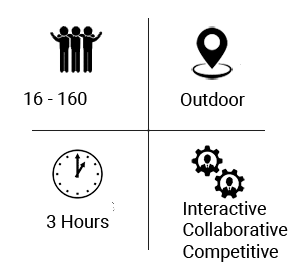
The current Event Square programme is approximately three to four hours. That matters: it works best when the company has genuinely allocated part of the day to being outdoors together rather than trying to squeeze the experience between two meetings.
Glendalough also brings real visitor-management considerations. Heritage Ireland currently notes uneven walkways at the monastic site and says the visitor centre is accessible while access to the graveyard is very difficult for wheelchair users. That is a reminder to discuss route, pace and accessibility before the programme is fixed.
Estate-based events offer a different type of flexibility
A fixed estate or outdoor venue gives organisers more control over activity placement, food, social areas and meeting space. Teams can rotate between short stations while the wider event remains based in one place.
This can be particularly useful for larger groups, mixed-ability teams or company summer events where the objective is broader than one outdoor challenge.
The advantage is not just scenery. It is the ability to combine activity, food, downtime and meeting requirements without repeatedly moving the whole group.
Choose activity intensity carefully
A company away day should not accidentally become an endurance test. Wicklow makes active programmes tempting because the landscape lends itself to hiking, navigation and outdoor challenges, but the team may include very different fitness, mobility and confidence levels.
Do not design for the most active person in the company. Design for the group.
For Glendalough-style programmes, discuss route demands and participation requirements early. For estate-based events, vary the challenge mix so planning, accuracy, communication, creativity and movement can all contribute.
Travel is part of the event
The event clock starts before the first challenge. If employees are leaving Dublin together, decide whether transport is part of the company plan.
A coach can simplify arrival and reduce the risk of people reaching rural locations at different times. If people drive independently, build a realistic arrival window and do not schedule the event briefing for the exact minute the final map estimate says everyone should arrive.
Someone will stop for coffee. Someone will miss a turn. Someone will arrive early. The operating schedule needs room for real people.
Avoid building the day around optimistic journey times
Maps provide estimates. Corporate groups create delays. Boarding, bags, toilet stops, weather and traffic all change the timetable.
Build buffers around activity start times, lunch, coach departure, hotel check-in and dinner reservations. Participants should not feel they are being marched through Wicklow against a stopwatch.
Have a weather decision process, not just a vague Plan B
Irish outdoor events need a weather plan, but the answer is not automatically “if it rains, go indoors”. Light rain may be manageable; high winds, poor visibility or persistent heavy rain may materially change the programme.
Agree who monitors the forecast, when the review happens, what can be modified and what genuinely triggers a change. Met Éireann’s current extended-range guidance says forecasts beyond about a week become increasingly uncertain and should not be used for specific planning decisions. Build the contingency well in advance, but make the operational weather call much closer to the event.
Tell people what to wear
One of the easiest ways to reduce enjoyment is to let participants arrive dressed for a completely different day.
If the programme involves hiking, grass, woodland or outdoor activity, say so clearly. Tell people whether they need walking shoes, waterproof outerwear, layers, sun protection, a change of footwear or a small day bag.
Avoid vague wording such as “smart casual suitable for outdoors”. Practical instructions remove uncertainty.
Food changes the pace of the day
Lunch is not just catering. It is programme design.
A sit-down meal creates a substantial pause. A BBQ keeps the atmosphere informal. A packed lunch supports a more mobile programme. Coffee and snacks can create a useful transition between meeting and activity time.
Think about what comes immediately after food. A demanding hill section straight after a heavy lunch is rarely ideal. Equally, a long formal lunch followed by another long seated meeting can undermine the reason you left the office.
Leave some unstructured time
Away days are often over-engineered. Every ten minutes has a scheduled purpose and every conversation is facilitated.
People also need time to talk. Coffee on arrival, twenty minutes after lunch, a walk back from the final challenge or a drink before the coach can be valuable.
The structured activity creates the shared experience. The quieter time allows people to process it together.
A focused half-day format
For companies that do not need a full away day, a half-day can work extremely well: arrival and coffee, briefing, a three-hour outdoor activity, short finale and prize giving, then late lunch or early dinner.
This makes the activity the central purpose of the trip and keeps the logistics relatively simple.
A full corporate away day
A longer programme allows more contrast: morning arrival and company update, coffee, outdoor team challenge, lunch or BBQ, a lighter afternoon activity or free time, then informal drinks or dinner before return transport.
The key is not to use every available hour. A full day should feel more spacious than a normal workday, not more exhausting.
Use outdoor activity for real team-development learning
Navigation naturally exposes planning, communication, leadership, decision-making, time management and how people respond when the first route or idea fails.
For graduate, leadership or team-development programmes, those behaviours can be reviewed afterwards. The learning should come from what actually happened rather than being attached artificially to the event.
Estate days work well for activity stations
For larger company days, a fixed base can simplify flow. Multiple teams can rotate between shorter stations while food and social areas remain central. Formats such as Celtic Games can suit this structure because the programme is built around several traditional Irish-inspired activity zones and a finale.
This kind of day can feel more like a company event than an expedition, which may be exactly what the brief requires.
Do not automatically add more activities
Once organisers see an activity menu, there is a temptation to add everything. More does not automatically mean better.
Every additional activity brings setup, staffing, briefing and transition requirements. Three strong elements that fit together normally feel better than eight things participants barely have time to experience.
Accessibility needs a real conversation
Do not rely on a checkbox. Ask what participants actually need.
Some people may be comfortable outdoors but not on steep or uneven ground. Someone may need regular seating. Another participant may be fine with a longer walk but unable to take part in a specific physical task.
Share requirements early enough to alter the programme properly. Inclusive planning does not remove challenge; it selects the right challenge for the actual group.
What should you include in a Wicklow event brief?
- Date and group size.
- Where participants are travelling from.
- Transport plan and realistic arrival window.
- Desired event length and activity intensity.
- Accessibility and mobility considerations.
- Food requirements and whether meeting space is needed.
- Preferred indoor/outdoor balance.
- What you want people to remember about the day.
That final question is useful. Do you want the lasting memory to be the landscape, the competition, the learning, the BBQ, the Irish experience or simply having proper time together? A good away day normally has one clear centre of gravity.
Planning a corporate away day in Wicklow?
Event Square runs mobile corporate events throughout Wicklow, including the Glendalough Adventure, Irish cultural activities and venue-based team programmes. The starting point is not an activity list; it is the shape of the day. Contact Event Square with your group size, travel plan, preferred area and what you want the team to get from the day.
Frequently asked questions
What are good ideas for a corporate away day in Wicklow?
Options include Glendalough navigation and team challenges, estate-based activity days, Celtic Games, outdoor challenges, BBQ programmes and facilitated team-development sessions.
Can we run a company away day in Glendalough?
Yes. Event Square’s Glendalough Adventure combines hiking, navigation, photo tasks, puzzles and team challenges in the valley.
How long does the Glendalough Adventure take?
The current standard Event Square programme is approximately three to four hours, with exact timings depending on the group and wider event plan.
Is Wicklow suitable for large corporate groups?
Yes, but the venue and activity structure should be selected around the numbers. Larger groups often benefit from fixed-base formats with several activity stations.
What happens if it rains?
The event should have an agreed weather process and contingency plan. Depending on the conditions and activity, the programme may continue, be modified or switch to an alternative.
Do we need to organise transport from Dublin?
Not necessarily, but group transport can simplify arrival and departure. If participants travel independently, build in a realistic arrival window.
Can we combine a meeting and team activity on the same day?
Yes. A venue-based Wicklow day can combine meeting time, catering and activities, provided the running order includes realistic setup and transition time.
Is Glendalough suitable for everyone?
The route and physical demands need to be considered for each group. Share mobility and accessibility requirements during planning so appropriate options can be discussed.