What makes an exhibition stand activity work? A good activity gives a delegate a reason to stop, something simple to do with their hands and a natural opening for a conversation. It should be understandable within seconds, quick enough not to block the aisle and realistic for the space, staffing and venue rules. It does not need another screen.
For marketing teams, conference organisers and exhibitors looking for exhibition stand activities in Dublin, the difficult part is not coming up with a game. It is choosing one that supports the stand’s purpose without creating a queue, a noise problem or a complicated load-in. Event Square works in mobile corporate team building and conference experiences across Ireland. A tailored stand activity would need to be scoped around the organiser’s brief and the venue; the concepts below are planning ideas, not an assertion that every miniature game is a standard ready-to-book Event Square product.
Start with the conversation you want, not the game you like
An exhibitor may want a friendly introduction to a product, a memorable demonstration, appointments with the right people or simply a way to make a technical subject less intimidating. Those are different objectives. Before choosing props, write down the one question you hope delegates will ask after playing.
For instance, a company discussing logistics could use a physical sequencing puzzle about handovers. A training provider could invite pairs of delegates to solve a short collaboration task. A destination or event organiser might prefer a simple map-and-clue activity. None of these requires a complicated backstory. The game should illustrate a point, then give the host a natural way to move from play into a genuine conversation.
It is also important to distinguish a trade-show stand activity from a full conference breakout or company team-building programme. A 60-minute facilitated session can work extremely well in a meeting room, but it is not automatically suitable for a three-metre-deep stand with a constant stream of passers-by.
Three ways to use hands-on activities at a conference
| Setting | Useful approach | Main operational constraint |
|---|---|---|
| Small exhibitor stand | One compact tactile puzzle or skill activity with a host | Footprint, safe queuing and fast reset |
| Larger sponsor or networking zone | Two or three short, independently staffed activity points | Movement between stations and whether spectators obstruct circulation |
| Booked breakout room | A facilitated team challenge lasting considerably longer | Room layout, delegate timetable, sound and changeover |
This distinction shapes everything else: the number of props, whether visitors participate alone or in pairs, how the activity resets and how much host time can be devoted to each visitor.
Six low-tech exhibition activity concepts to consider
1. A one-minute physical logic puzzle
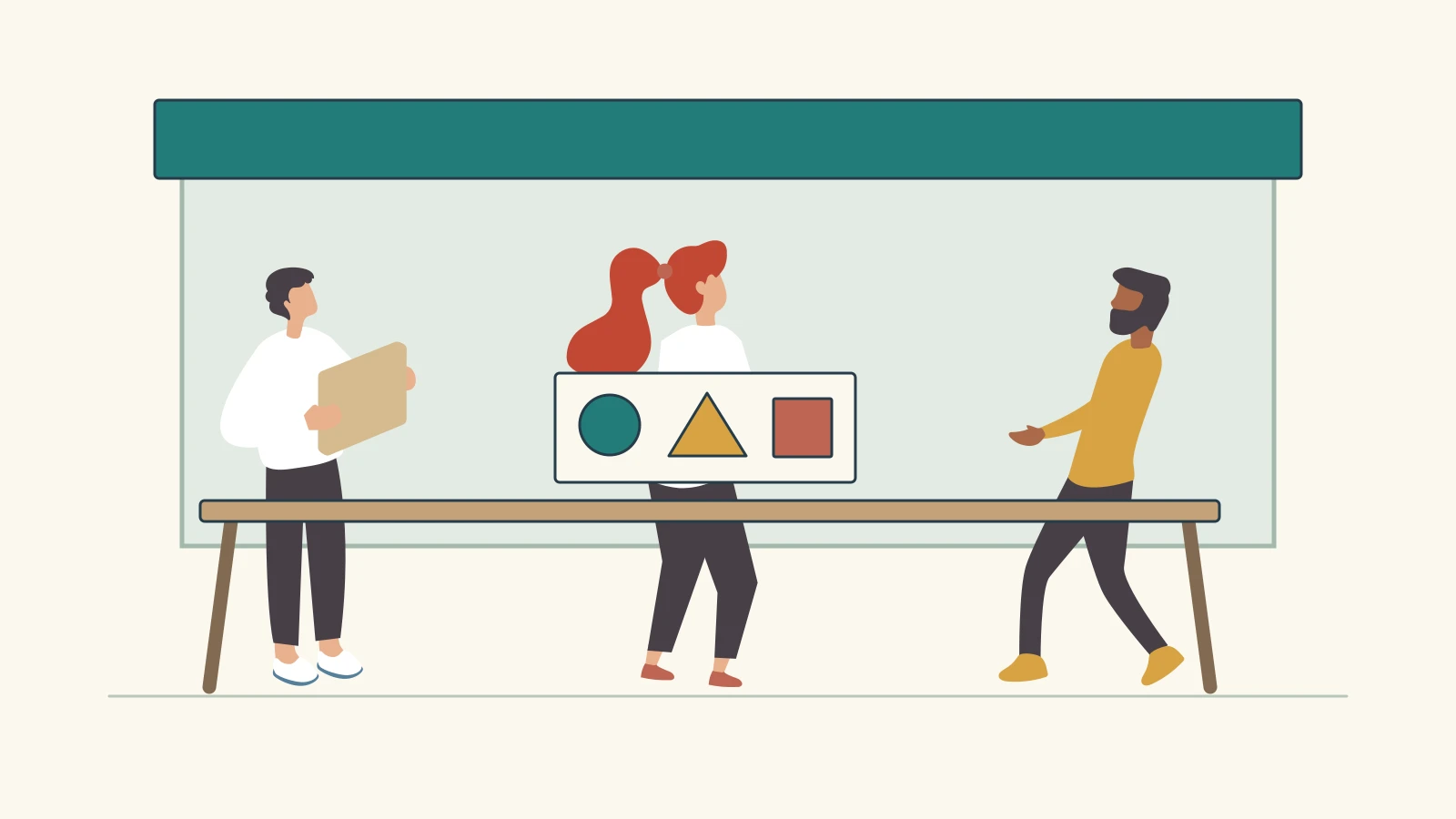
Place a small, robust puzzle on a properly sized table with a simple instruction card. Delegates can try it alone or with a colleague while the host offers a hint. A shape-fitting challenge or sequencing task is easier to explain at an exhibition than a complex multi-part escape room. Avoid fiddly pieces that are easy to lose, and agree what happens when a participant wants to keep trying after the stand becomes busy.
Event Square’s Beat the Clock programme demonstrates the broader appeal of tactile puzzles and construction tasks, although its published format is a one-hour facilitated corporate activity. A compact stand adaptation would need separate design and confirmation, rather than presenting the full programme as a one-minute game.
2. A shared construction challenge
Give two people a small set of larger blocks, pieces or connection parts and a clearly visible goal. The task might ask them to build something stable or reproduce a simple pattern. It creates a natural conversation about planning and communication, which is more useful than asking visitors to watch an unrelated demonstration.
Make the work surface usable from seated and standing positions where possible, and avoid structures that can fall into walkways. A loose pile of small components may look inexpensive, but it creates reset and housekeeping work throughout the day.
3. A paper-map or clue challenge
A folded map, envelope and a small set of clues suit organisations whose story involves places, journeys or problem-solving. The final answer can be revealed by the host, allowing a brief conversation about the wider event or service. For an Irish-themed international conference, a local detail can add interest, but it should be correct and understandable to overseas delegates.
This draws on the same low-tech appeal as Event Square’s Dún Laoghaire corporate treasure-hunt guide without pretending that an urban walking hunt is the right format for an exhibition stand. A short tabletop clue is a different proposition and should be briefed as such.
4. A teamwork coordination task
Use a pair-based task with a clear finish, such as guiding a token through a small tabletop maze together. These activities can be fun to watch, but they require a host who keeps the instructions consistent and prevents the activity area from spilling into the aisle. Choose equipment that is stable, easy to clean and safe for the available surface.
Do not build the entire experience around a loud countdown. It can make the stand stressful for nearby exhibitors, create pressure for visitors and exclude people who need more time to understand the task. A friendly, untimed version may serve the conversation better.
5. A collaborative creative display
Visitors contribute one small element to a shared visual—perhaps a paper tile, pattern piece or coloured shape. By the end of the event it creates a collective result. This can work where the exhibitor wants an idea about partnership, different perspectives or a shared destination.
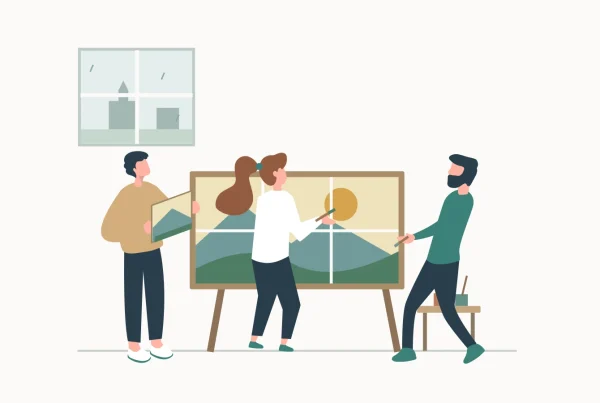
Event Square’s Big Picture is a structured collaborative painting experience for corporate groups. It should not be confused with a casual expo wall: a stand-sized creative interaction needs its own material plan, approved display method, safe working space and waste management. Paint, adhesives and tall structures may not suit the venue or stand.
6. A host-led Irish cultural touchpoint
For visiting delegates, a recognisably Irish element can be a conversation starter. Consider small illustrated heritage clues or a short host-led question about an Irish place or tradition rather than automatically bringing a noisy workshop into the exhibition hall. If a full cultural activity is appropriate, a separate scheduled breakout may be a better home for it.
Event Square’s Irish-themed conference activities guide compares formats that belong in properly planned meeting or cultural sessions. Sound, performance, permissions and the needs of adjacent stands must be addressed before considering them in an exhibition area.
How much room does an activation really need?
Start with a simple sketch showing the activity table, staff positions, visitor entry and exit, and any queue. Include chairs, brochure racks, storage and the stand structure. Mark the space that must remain clear; it cannot be borrowed simply because the game is popular.
Imagine an illustrative exhibition stand with a small puzzle table near one accessible open edge. One person welcomes visitors and directs those who want to play; another explains the activity and can finish the conversation or hand it over. This is a layout concept, not a specification for any particular stand size or a promise about staffing. The actual design needs the organiser’s allocated footprint and approval.
Queues need a reset plan. If every visitor gets a lengthy individual explanation, even a short puzzle can create a bottleneck. Test the experience with someone who has not seen it before: can they identify what to do, begin comfortably, complete or leave without embarrassment, and step aside while someone else starts? Count reset time as well as play time when estimating how many visitors a station might accommodate.
A real Dublin venue check: the CCD example
Every exhibition venue has its own contractor and exhibitor procedures. The Convention Centre Dublin exhibitor information points organisers to rules, health and safety, stand-building information and delivery arrangements. Its access and deliveries guidance explains that event equipment must follow designated delivery arrangements rather than assume access through the public front entrance.
These links are useful examples of why an exhibitor should verify load-in times, permitted equipment, power requests, stand construction rules and movement routes in advance. They do not imply that Event Square is an approved supplier to the CCD or that a proposed activity has been authorised for any event. The same principle applies when planning for other Dublin exhibition venues, including the RDS: ask the actual organiser and venue for the current event-specific handbook.
Accessibility and visitor choice matter on a busy exhibition floor
A stand game should not block the accessible route or require every delegate to stand, hear a shouted instruction or manipulate a tiny object. Offer a concise visual explanation and a spoken explanation; make print readable; consider whether the table can be reached from different positions. Avoid strobe effects, unnecessary whistles and public scoring that makes people uncomfortable.
There should also be an easy way to observe, opt out or take part in another way. Good engagement is a voluntary interaction—not a condition of receiving information about the business. If the exhibitor collects contact details, those arrangements should be handled separately and transparently under its own data-protection processes. Do not assume that playing a game is consent to photography or marketing emails.
For accessibility planning, see Fáilte Ireland’s event and festival accessibility resources and ask the venue about its current access arrangements. Event design should reflect the real audience, not a generic description of “all delegates”.
A practical conference-break running order
Suppose the organiser wants a hosted activity available during a 60-minute refreshment break. The illustrative operational plan would be:
- Before doors open: confirm the table, queuing area, clear routes, props, signage, storage and the person responsible for resets.
- At the start of the break: invite visitors with one short instruction rather than a lengthy pitch.
- Throughout the break: keep the host available, replace materials, check that the queue remains inside the allocated area and allow easy participation or observation.
- As sessions resume: finish active games without blocking the aisle, reset equipment and close any conversations appropriately.
- After the break: record practical observations—what attracted attention, where a queue formed and which instructions confused people—without turning impressions into invented performance statistics.
This is not a claim that one host or one activity can serve a particular number of delegates. Throughput depends on the actual duration of each interaction, the crowd, staffing, footprint and venue requirements.
What to put in the activation brief and quote request
Send the event name and date, Dublin venue, organiser’s stand rules, exact stand dimensions, likely delegate profile, available time windows and the purpose of the interaction. Add photographs or plans if available. Explain whether the activity may be branded, whether prize handling is wanted, and whether materials need to be reusable or transported to another city.
Ask the supplier to distinguish design and preparation, props, staffing, travel, setup and collection, branding, any venue charges and the responsibilities of the exhibitor or organiser. Some activity concepts may require new materials or a different staffing arrangement. Nothing in this article is a fixed quotation, confirmed venue approval or promised attendance result.
If the event is really asking for a larger team session rather than a stand game, compare our conference and large-group activities and conference meeting support. These are separate formats, and selecting the right one often saves an unnecessary attempt to force a full team programme into an expo footprint.
Frequently asked questions about exhibition stand activities
What are good exhibition stand games for a Dublin conference?
Compact puzzles, simple construction tasks and short hosted clue challenges can be useful starting points. The best option is easy to explain, easy to reset and suitable for the approved stand layout.
Can Event Square provide a hands-on exhibition activation?
Event Square can discuss a tailored corporate-event or conference brief. A stand-sized concept must be assessed and quoted for the venue, footprint, materials and staffing; it should not be assumed to be an existing fixed package.
Do exhibition activities have to use tablets or screens?
No. Paper clues, blocks, tabletop puzzles and other physical props can start face-to-face conversations. A digital element may suit some briefs, but it is not a requirement for engagement.
Can Beat the Clock be run as a two-minute stand challenge?
Its published format is a one-hour facilitated programme. A shorter, stand-sized idea inspired by physical puzzles would require a separate discussion and design rather than simply relabelling the existing product.
What should I check with the exhibition venue?
Confirm the allocated stand dimensions, queue limits, fire routes, load-in and load-out, furniture and power orders, approved equipment, sound restrictions and the organiser’s contractor rules.
Are these ideas suitable for international delegates?
They can be, particularly when instructions are simple and language-light. Test them with people unfamiliar with the activity and avoid clues that depend entirely on local cultural knowledge.
Should we offer prizes or a leaderboard?
Only where that serves the objective and the organiser has approved the arrangements. A low-pressure shared challenge can be a better fit than loud competition, particularly in a crowded exhibition hall.
Can we use participant photographs or collect email addresses?
Not automatically. Photography, personal data and subsequent marketing require appropriate notices, permissions and processes. Activity participation alone should not be treated as permission for either.
Discuss a practical Dublin conference activation
The best stand activity is one that your team can operate well for the whole event. Contact Event Square with the conference brief, venue, dates, stand plan and what you want delegates to experience. We can explore whether a suitable hands-on concept or a separate facilitated team session is the right fit.