What are good conference networking activities in Ireland? The most practical options give delegates something to do together: solve a short physical puzzle, make a shared creative result or work through a facilitated mini-challenge. The activity should provide a natural reason to talk to someone new, fit the agenda and work in the actual venue space. It does not need a networking app, QR codes or another screen.
Event Square delivers mobile hands-on corporate experiences across Ireland. For conferences, our first question is what networking is supposed to achieve. Does the organiser want colleagues from different offices to mix? Do international delegates need to meet local colleagues? Are guests at a conference reception looking for an easy conversation starter? Each goal calls for a different design.
Networking, icebreakers and conference energisers: what is the difference?
An icebreaker helps people feel comfortable at the beginning of a gathering. An energiser provides a change of pace after presentations. A networking activity deliberately creates useful interaction between people who might otherwise remain with colleagues they already know. A challenge can do all three, but only if the group allocation, timing and facilitation support the actual objective.
Consider the difference between colleagues competing only with their established department and being placed in mixed teams for a task. Both groups may enjoy the exercise; only the second arrangement is intentionally designed to build new connections. The seating and rotation plan can matter as much as the equipment.
Five low-tech conference activities that encourage real conversations
1. Tabletop puzzle challenges
Beat the Clock uses physical puzzle packs, brain teasers and construction tasks. Groups are given a straightforward shared problem, so conversation starts around something tangible rather than awkward introductions. The Event Square website describes a one-hour format.
For networking, an organiser can consider mixed-table assignments and a short introduction or discussion at the end. A shorter or differently structured version would require a separate bespoke programme brief; it should not be presented as automatically included in the standard product.
2. Collaborative artwork across groups
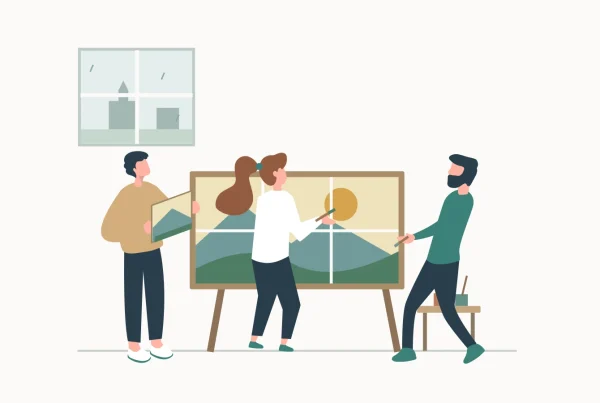
Big Picture divides participants into teams painting different sections of one larger image. Colours and lines must match across borders, which creates a reason for groups to coordinate rather than focus only on their own table. The final reveal provides a shared moment to close the session.
This format needs time for preparation, protected tables, materials, the reveal and artwork handling. It works as a proper scheduled activity, not a last-minute five-minute interruption before the keynote.
3. Small facilitated activity stations
For an event with a larger audience, organisers can explore short problem-solving or hands-on stations inspired by challenge formats such as Krypton Factor Challenge or WeGo Team Challenge. The individual station design would be bespoke: the full named multi-station programme cannot be assumed to fit a foyer or exhibition space.
A good networking station has a clear starting point, a simple task that can be explained quickly, enough equipment for active participation and an obvious finish. A poor one creates queues across the coffee station, registration desk or fire exits. Flow through the venue is as important as the challenge itself.
4. Participatory Irish experiences for visiting delegates
For multinational or international incentive groups, an Irish-themed activity can help people connect through a shared experience instead of passively watching a performance. Celtic Games is Event Square’s outdoor Irish-inspired team challenge, subject to the right venue and conditions. It may fit a conference social programme or afternoon excursion, but should not be described as an indoor networking pod without a specifically agreed adaptation.
Choose activities that people can understand without specialist cultural knowledge. Provide a practical demonstration and make sure there are ways for participants with different mobility and language needs to take part.
5. A shared story at the evening social
After a day of talks, an actor-led Murder Mystery can give the right-sized group clues, characters and a common story to discuss. It is most relevant when the group has a private evening space and the storyline suits the number of guests. It requires a coordinated running order with performers, catering and any speeches. It is not interchangeable with a short morning energiser.
What actually fits into a conference break?
| Time available | Practical starting point | Risk to manage |
|---|---|---|
| About 30 minutes | A deliberately short facilitated conversation or one compact bespoke task | Briefing and moving attendees consume the slot |
| About 60 minutes | A complete tabletop challenge where the room is ready | Catering and furniture leave no working surface |
| About 90 minutes | Two selected team tasks with a controlled group change and short finale | Too many rotations reduce conversation time |
| A reception or exhibition interval | Optional, repeatable points of interaction if designed and staffed | Queue spillover blocks delegate routes |
These are design patterns, not fixed Event Square products or guaranteed packages. The activity format, running order, pricing and staffing must be confirmed for the brief. Sometimes delegates need a genuine break more than another structured session.
How to make networking happen rather than merely hope for it
Mix people deliberately. When cross-department introductions are the aim, colour-coded table allocations or pre-assigned teams are more effective as a design tool than letting every department sit together. Keep instructions short and avoid several complicated movements around the room.
Give every person a useful role. Physical puzzles allow people to handle materials, check logic, organise pieces, communicate clues or review the final answer. Do not force people to perform publicly, reveal personal information or compete in a physical task if that does not suit them.
Choose a comfortable level of competition. A score can add pace, but aggressive scoring may discourage a group whose main purpose is business conversation. Where connection matters most, build in time to acknowledge a collaborative result rather than immediately announcing one winner.
Keep the technology proportionate. Registration platforms and conference apps may serve their own purposes, but delegates need not use a screen to collaborate. Paper, wooden pieces, simple props and a capable facilitator can create an activity with fewer digital distractions.
A planning example for a 240-delegate conference
Imagine an Irish conference with 240 delegates and a request for activity stations in a reception area. Begin with capacity maths, not a list of games. If a station were designed for 20 active participants at once, twelve comparable stations would be needed to involve all 240 simultaneously. This is arithmetic to illustrate planning, not an Event Square station-capacity recommendation, staffing ratio or guarantee.
In reality, not everyone may need to take part at once. A voluntary reception format could have small groups join short challenges while others chat over refreshments. Alternatively, the audience could rotate through approved breakout rooms in timed cohorts. Which option is sensible depends on whether participation is optional, how long the activities take, the floor plan, queue space, equipment and the meeting agenda.
Ask an activity supplier to specify the simultaneous capacity, realistic time per participant, staffing and required clearance in writing. Do not infer throughput from a hotel’s theatre-style delegate capacity.
An illustrative 75-minute networking programme
This running order shows how an organiser might structure a bespoke low-tech networking session; it is not a standard Event Square package.
- 00:00–00:10: welcome, simple demonstration and allocation to mixed groups.
- 00:10–00:30: first physical puzzle or shared construction task, with everyone assigned a contribution.
- 00:30–00:35: controlled change of grouping; avoid sending the full audience across a congested hall.
- 00:35–00:55: second collaborative task that requires a different approach and new conversations.
- 00:55–01:10: shared results, reflections and introductions beyond the original table.
- 01:10–01:15: clear finish and one joining instruction for the next conference session.
Equipment load-in, pre-event setup and room return take place outside these 75 minutes and must be included in venue planning. A schedule that looks neat on paper is not workable unless everyone responsible for the event agrees to it.
Venue checks for Dublin, Cork, Galway, Belfast and beyond
The location may be a Dublin conference hotel, a Cork meeting venue, a Galway incentive programme or a Belfast event space. The core operational checks remain the same:
- Unobstructed circulation: no stations across escape routes, catering queues or access to lifts and toilets.
- Usable space: measure what remains after staging, AV, exhibition stands, tables and seating are installed.
- Sound: know whether adjacent meeting sessions, speakers or exhibitors require a quieter activity.
- Furniture and surfaces: confirm tables, paint protection if relevant, storage, waste management and room reset responsibility.
- Accessibility: provide seated roles, step-free movement and quieter participation options where needed.
- Time: protect the briefing, challenge, transition and conclusion rather than squeezing them into the delegates’ only comfort break.
- Permissions: get explicit approval for foyer, terrace, restaurant or outdoor use.
For destination-level conference and incentive planning in Ireland, Meet in Ireland provides a useful official starting point. Venue and activity permissions still need to be checked individually.
What to avoid when planning conference networking
Avoid an activity just because it makes a striking photograph. A visually dramatic game can still be unsuitable for a small or crowded foyer. Do not put multiple short challenges into a break so tightly scheduled that delegates have no time for coffee or conversation. Do not assume a technological leaderboard makes an experience more sociable. And do not plan around a single winner if the aim is to help colleagues across the company meet.
It is also worth resisting the temptation to claim that a fun activity guarantees improved retention or collaboration. The real value is a facilitated opportunity to interact; how the organisation builds on that experience afterwards matters too.
What should be included in a useful enquiry?
Share the conference date, exact venue, number of delegates, agenda slot, desired interaction, audience mix, approximate budget, whether participation is optional or compulsory, and any mobility, sensory or language needs. Attach the actual floor plan rather than only the venue’s advertised capacity. Then ask for a proposal that separates activity delivery, setup, staffing, equipment, venue requirements and additional costs.
Frequently asked questions about conference networking activities
What is the best activity for getting conference delegates to mingle?
A short shared task with mixed groups can make conversation feel natural. A tabletop puzzle is practical for seated delegates; a longer creative programme can give multiple groups a reason to coordinate.
Can we organise conference networking without smartphones?
Yes. Physical puzzles, paper clues, construction tasks and collaborative artwork can all be delivered through hands-on participation. Check the chosen product rather than assuming every Event Square activity is screen-free.
What if delegates have never met?
Use a low-pressure task with clear roles and mixed teams. Avoid forcing personal disclosures or performances in front of unfamiliar colleagues.
Could an activity run during coffee service?
Possibly, if the task is short and optional, the room allows it and the activity does not obstruct catering or access. A full one-hour programme should not be compressed into an ordinary short comfort break.
What about conferences with hundreds of people?
Calculate simultaneous participation, activity duration, station numbers, rotations and staffing for the actual floor area. Delegate capacity and active-participation capacity are different figures.
Will international delegates be able to take part?
Often, with appropriate visual demonstrations, accessible task roles and consideration for language or cultural differences. Not every trivia question or word puzzle works equally well for a multilingual group.
Is a separate breakout room necessary?
Not for every format. Some compact tasks may fit an approved reception or exhibition area, but the venue must confirm furniture, noise, circulation and permission.
Can we add networking to a conference dinner?
Yes, where the programme and group size fit. A hosted creative or mystery experience may suit some evenings, but its timing must be coordinated with food service and speeches.
Plan a conference that creates real conversations
If you are organising a conference in Ireland, Event Square can discuss a practical, low-tech participation format shaped around your audience and venue. Send us your event details, browse indoor team-building options, or read our separate conference energiser guide. Networking is about new connections; energising is about changing the pace. A good event can make space for both without confusing them.