How do you run team building for a large company without leaving half the room waiting in queues? Divide the group into smaller teams, create distinct activity areas and plan the movement between them before the event. A multi-zone format works when each station can accommodate the teams assigned to it, the venue has enough usable space and the finale brings everyone together.
Event Square’s WeGo Worlds Challenge is a modular team-building programme with four to six themed zones and a shared finish. Here is how that kind of hands-on event is planned in practice. This is about flow and delivery, not another generic list of large-group activities; our wider large-group team-building guide covers broader programme selection.
What is a multi-zone corporate team challenge?
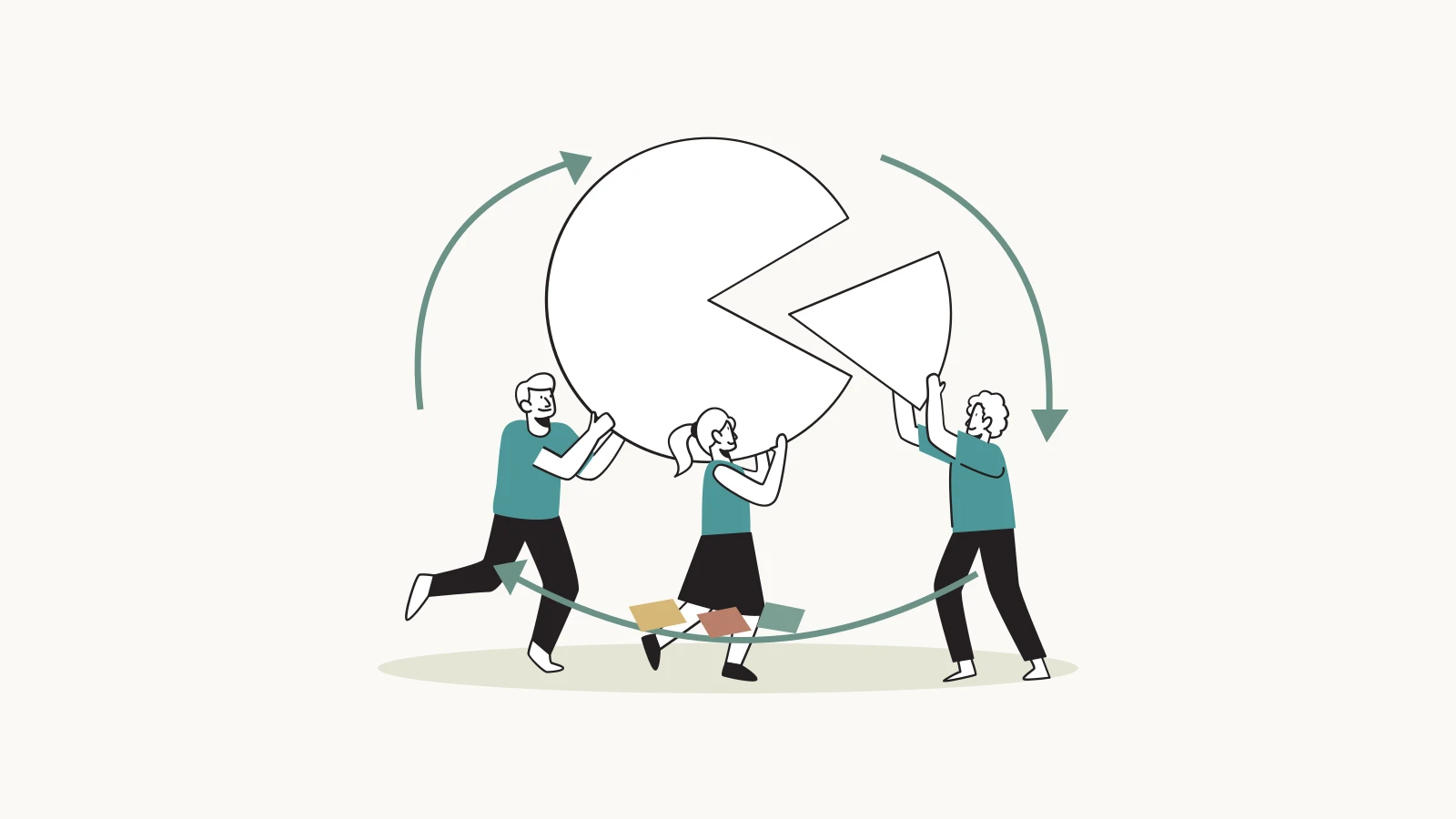
Instead of sending everyone to one challenge in a long line, a multi-zone day spreads participants across different activities. Colleagues work in smaller teams and rotate to new areas at agreed times. They may solve a logic problem, build something together, attempt a coordination task or participate in a carefully chosen competitive challenge. They accumulate results before a whole-group finale.
For organisers, the goal is to give people meaningful participation, not simply to make the activity map look impressive. A zone count does not describe capacity by itself. Six attractive stations that each serve one team at a time will create a bottleneck if twelve teams are scheduled to play simultaneously.
The activity zones: variety, not six versions of the same game
The published WeGo Worlds format describes a flexible range of themes. The following are examples of what each could emphasise; none should be taken as a guaranteed activity at a particular venue.
| Theme | Team skill in focus | Venue question to resolve |
|---|---|---|
| Target | Accuracy, focus and measured competition | Are the necessary clearances and permissions available for the selected equipment? |
| Beat | Rhythm and shared coordination | Could noise affect meetings or other guests nearby? |
| Build | Design, making and collaborative problem-solving | How many separate sets of materials and worktops are needed? |
| Logic | Reasoning, observation and planning | Can facilitators explain and score tasks consistently? |
| Comms | Listening, information-sharing and decision-making | Can teams hear each other without interference? |
| Energy | More active participation where suitable | Are the surfaces, space and access appropriate? |
One advantage of this mix is that different people can contribute in different ways. An event dominated by speed or sporting ability may favour the same participants repeatedly. A well-planned programme includes creative, practical and communication-based tasks alongside any more active stations.
How many teams can play at the same time?
Consider an illustrative group of 120 colleagues, divided into twelve teams of ten. Suppose the organiser wants six zones running simultaneously. Each zone must accommodate two teams at once if all twelve are to be active during every rotation. That might require two parallel lanes at each zone, duplicate equipment and sufficient facilitators, as well as enough space to separate the teams fairly.
If a zone has only one practical working lane, it cannot suddenly accommodate two teams because the client has increased the guest count. Options might include changing the challenge, creating another lane, using separate waves, adjusting team numbers or building a different rotation timetable.
This example is not a fixed Event Square capacity or package. The appropriate team size and number of stations depend on the equipment, participant mix, space, event length and staffing. Organisers should ask for the simultaneous capacity of each proposed zone, not just a statement that the programme suits large groups.
What does a three-hour rotation plan look like?
A realistic schedule includes instructions, movement, scoring and the finish—not only the time spent competing. For the hypothetical 120-person event above, one possible three-hour outline is:
| Stage | Illustrative allowance | Operational check |
|---|---|---|
| Arrival, welcome and team allocations | 20 minutes | Clearly marked meeting point, teams and station instructions |
| Six station rounds | 6 × 15 minutes | Tasks and resets genuinely fit each round |
| Movement between zones | 5 × 3 minutes | Routes can handle the groups without congestion |
| Comfort and refreshment break | 15 minutes | Facilities can serve the group without long queues |
| Whole-company finale | 25 minutes | Every team can participate or clearly follow the result |
| Scoring, prizes and close | 10 minutes | Score collection is complete before the finale ends |
That is 175 minutes, leaving only five minutes within a three-hour window for unexpected delays. An estate with long walks between areas may require more movement time. A hotel that needs the same room reset for dinner may require an earlier finish. The correct programme is designed backwards from those realities.
Even the fifteen-minute station period needs scrutiny. If four minutes are spent on a task briefing, two on scores and another two resetting equipment, the team has only seven minutes of actual activity. Sometimes a longer rotation with fewer zones delivers a better experience than rushing delegates through every possible challenge.
How to assess a hotel, estate or sports ground for a zone event
The headline guest capacity tells you surprisingly little. The useful information is the amount of clear, approved and accessible working space in each proposed activity area. Before committing, obtain a current site plan and confirm the zones with the venue team.
- Station footprint: Allow for equipment, facilitators, safe clearances and team movement.
- Noise and separation: Keep instructions audible, especially where music and puzzles operate nearby.
- Circulation: Avoid routes that cross vehicle loading, kitchen service or other event areas.
- Permissions: Check which equipment and activities the venue actually permits indoors and outdoors.
- Access needs: Plan suitable pathways, toilets, rest points and seated or lower-impact roles.
- Facilities: Consider the real throughput at toilets, refreshments and the finale assembly area.
- Changeover: Know who restores furniture, when equipment leaves and whether catering needs the area.
The Health and Safety Authority’s June 2026 outdoor-events update highlighted contractor supervision, traffic management and equipment safety at major events. A corporate team day is not automatically subject to all the same operational arrangements, but these are useful matters for organisers and suppliers to address wherever applicable.
Scoring should support participation, not dominate the programme
A scorecard can add a bit of friendly competition, yet it should not take longer to administer than the tasks themselves. Agree the scoring method across zones before the event, check that different activity types are reasonably comparable, and allow facilitators to record results consistently. A simple paper system can be more dependable than asking every participant to download an app.
The finale deserves its own planning. It gives everyone a common experience after rotating through different areas, and provides a natural point for awards, thanks and a short company message. Plan its sound, visibility and participant flow independently from the smaller stations. Avoid a long wait while results are manually reconstructed.
Keeping a large event inclusive and low-tech
Hands-on team building can offer something different after a morning of screens and presentations. Wooden construction pieces, physical puzzles, scorecards, rhythm exercises and practical coordination tasks encourage face-to-face participation. That does not mean a programme is suitable for everyone without adjustment.
Ask about mobility, hearing, sensory requirements and colleagues who may prefer non-athletic tasks. Include substantive roles across the zones, rather than making somebody the default spectator. Some event formats involve equipment, noise or physical activity that should be discussed before a final station list is agreed.
What happens when it rains?
A six-zone outdoor activity cannot necessarily be recreated in one function room. Indoor options need their own practical layout, with clear floors, safe movement and activities that suit the space. A genuine Plan B may use different tasks, fewer zones, a separate room or a changed event schedule. Venue availability and supplier equipment must be confirmed in advance.
For outdoor planning, keep an eye on the site-specific forecast and Met Éireann weather warnings. Rain is not the only issue: wind, saturated ground and exposed sites can affect whether an activity is appropriate. Agree a decision-maker and a deadline, rather than leaving the venue, client and supplier to interpret the forecast independently on the morning.
What should an Event Square proposal make clear?
For a multi-zone team day, request a quote that identifies the group assumption, duration, outline zone mix, number of simultaneous team places, staffing, materials, load-in, setup, breakdown, finale and weather arrangements. The venue, transport, catering and specialist hire should be specified separately when they are not included. A single per-head number without a working layout is not a complete event plan.
Where a group is small or the meeting only leaves an hour, a different programme might be more efficient. Compare the WeGo Team Challenge, the creative Big Picture or the compact Beat the Clock rather than assuming that more zones always mean a better event.
Frequently asked questions about multi-zone team building
How many zones are in WeGo Worlds Challenge?
Event Square’s published format describes four to six themed zones and a whole-group finale. The final activity mix depends on the venue and brief.
Does a six-zone event only work for six teams?
No. Parallel task lanes or another rotation arrangement can change capacity, but each zone must be designed and staffed for the teams using it.
How big should each team be?
There is no fixed ideal. Team size should support meaningful participation and should be calculated alongside the simultaneous capacity of each challenge.
Can this happen inside a hotel ballroom?
Potentially, if a suitable layout and activity mix can be agreed. Seated delegate capacity is not the same as capacity for moving teams and equipment.
Do all the challenges involve sport?
No. The programme includes creative, rhythm, logic and communication themes as well as more active possibilities.
Is this suitable after a conference?
It can be, provided sufficient time and suitable space are available. Short gaps may be better suited to a compact energiser or tabletop activity.
What if guest numbers change?
Team allocations, parallel station capacity, equipment and facilitation may need to be recalculated. Numbers should not be increased without reviewing the running order.
Can Event Square quote without a venue confirmed?
An initial discussion is possible, but a reliable final proposal needs the location, group, duration and available activity areas.
Plan a multi-zone company team day that flows
If you are planning a large company event in Dublin, Wicklow or elsewhere in Ireland, send Event Square the date, venue, approximate guest count, activity window and a floor plan if available. We can discuss whether a themed-zone programme is appropriate for the real site. Contact Event Square, review the WeGo Worlds Challenge or compare our large-group event planning guide before booking.